How it works
Four reads of the same market.
Price alone tells you what happened. The desk lines it up against who was buying,
whether positions were opening, and whether price is cheap or expensive relative to
where volume actually traded.
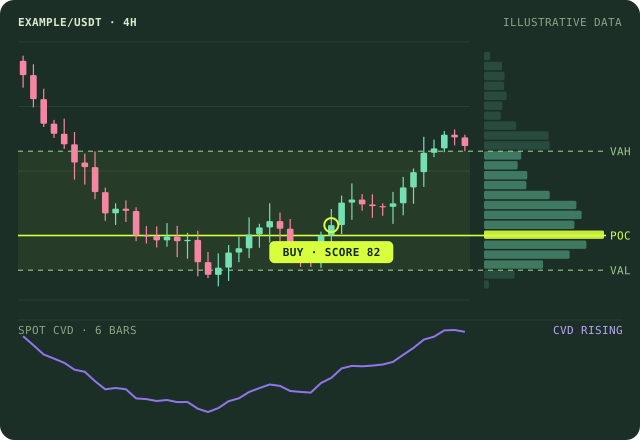
VOLUME + CVD
Who is hitting the ask
Cumulative volume delta from Binance spot taker-side volume: aggressive buying
against aggressive selling, candle by candle. Relative volume compares the latest six
candles with the twenty before, and divergences between price lows and CVD are flagged.
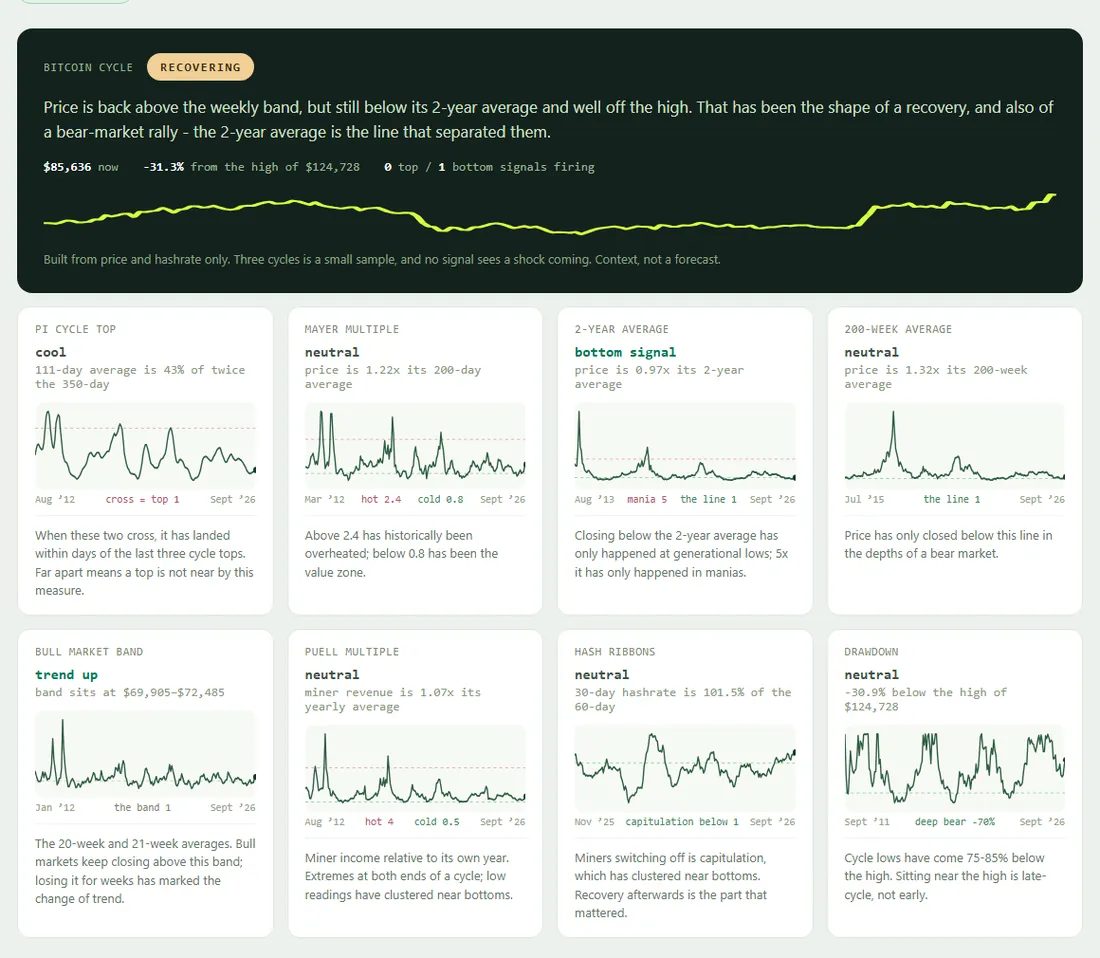
OPEN INTEREST
Are positions opening
Binance USDT-perpetual open interest for the same coin, measured in contracts so price
alone cannot inflate it. Rising price, positive spot delta and rising OI together support
an expansion. OI is shown as context: it adds to the score, and missing or stale OI is labelled rather than guessed.
VAL / VAH / POC
Is price cheap or stretched
A volume profile over a rolling 24 hours, 3 days or 7 days gives the point of control and
the value area. Entries near value, or a fresh reclaim of POC, score; trading below value
or deep into overbought costs points.
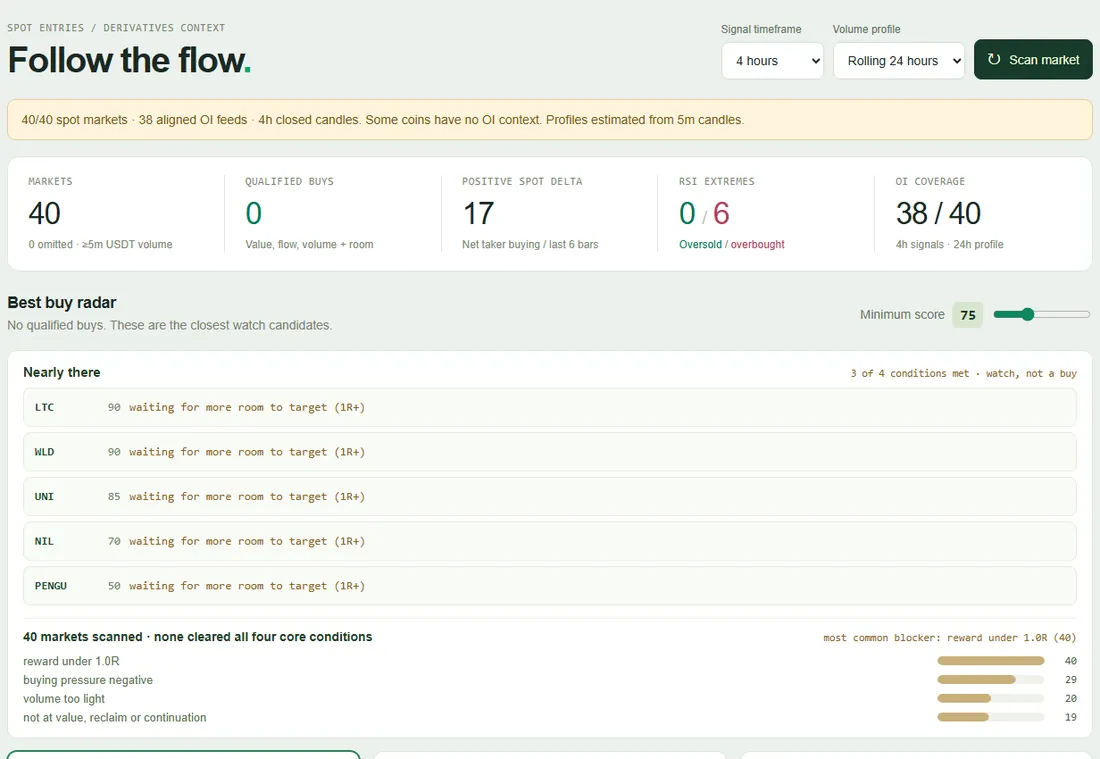
BUY RADAR
Ranked, with the reasons
Each market gets a confluence score out of 100 with its factors broken out, an entry
zone, an invalidation level and targets at POC or VAH. A high score can still say
Watch — the desk tells you which condition is missing.